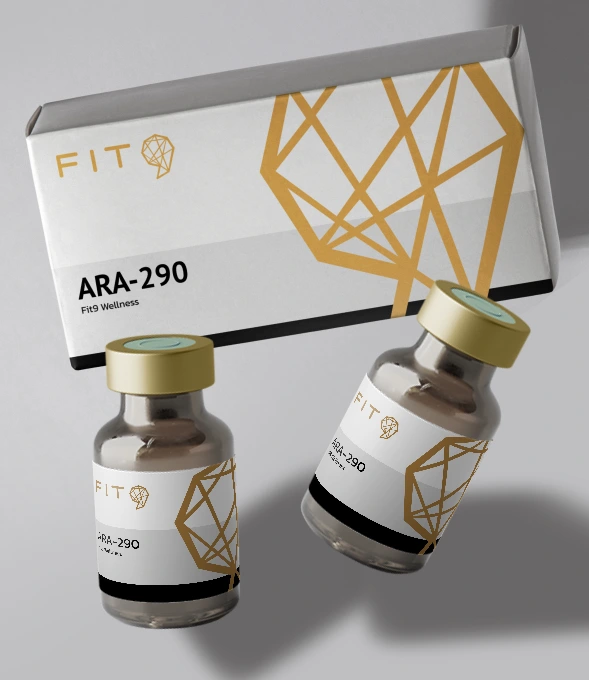
Modern science is increasingly turning to peptides—short chains of amino acids capable of triggering powerful recovery and protective processes in the body. One such compound is ARA-290, which has attracted researchers’ attention due to its unique properties in combating inflammation and tissue damage. Recently, it has been actively studied in the context of treating neuropathies, diabetic complications, and even autoimmune diseases.
What the ARA-290 Peptide Is
ARA-290 is a short synthetic peptide created based on the active region of the erythropoietin (EPO) molecule. Unlike EPO itself, which affects red blood cell production, ARA-290 does not increase red blood cell levels and is aimed exclusively at tissue protection and regeneration. This makes it safe for use by eliminating risks associated with increased blood viscosity.
The key distinction of ARA-290 lies in its action on a specific receptor—EPOR/CD131—which is responsible for anti-inflammatory and neuroprotective functions. Thanks to this, cellular recovery mechanisms are activated without stimulating erythropoiesis.
Mechanism of Action on the Body
The effects of ARA-290 are based on activating the body’s natural defense mechanisms. When cells experience stress, inflammation, or damage, the peptide helps initiate signaling pathways that reduce inflammatory cytokines and restore cellular metabolism.
The main effects of the peptide include:
- reduction of inflammation in tissues;
- protection of nerve cells from damage;
- accelerated regeneration after injuries;
- improved microcirculation and tissue nutrition;
- reduction of pain syndrome.
After the use of ARA-290, the body adapts more quickly to stress, tissues recover more efficiently, and levels of chronic inflammation are noticeably reduced. Its impact on the nervous system is particularly important—the peptide helps restore sensitivity in neuropathies and reduces pain sensations.
ARA-290 and the Nervous System
The most pronounced effects of this peptide are observed in disorders of the peripheral nervous system. Studies show that it contributes to the restoration of the myelin sheath of nerves and reduces inflammation caused by diabetic or post-traumatic neuropathy.
In addition, ARA-290 positively affects pain receptors. It does not block them directly, as conventional painkillers do, but normalizes the function of nerve pathways, making the effect more natural and long-lasting.
Observed effects include:
- reduction of tingling, burning, and numbness in the limbs;
- improved sensitivity and motor function;
- restoration of movement coordination;
- reduced levels of chronic fatigue.
Thanks to these properties, the peptide is considered a promising agent for neuropathic pain associated with diabetes, injuries, or chronic inflammation.
Anti-Inflammatory and Protective Properties of ARA-290
In addition to its effects on the nervous system, the peptide demonstrates pronounced anti-inflammatory properties. It reduces the activity of cytokines—proteins responsible for maintaining inflammatory processes—while simultaneously enhancing antioxidant defense.
Main areas of action include:
- reduction of oxidative stress;
- protection of blood vessels from damage;
- acceleration of wound healing;
- support of liver and kidney function during inflammatory processes.
Interestingly, ARA-290 can act not only locally but also systemically, helping the body control inflammation as a whole. This makes it promising for use in autoimmune diseases, where excessive immune responses damage the body’s own tissues.
Applications and Potential Research Directions
The peptide is currently undergoing clinical research, but its potential has already been confirmed by a number of scientific studies. In the future, ARA-290 may be used to treat conditions such as:
- diabetic neuropathy;
- chronic inflammatory diseases;
- nerve damage after injuries;
- ischemic tissue damage;
- chronic fatigue syndrome.
Researchers are also exploring the possibility of using this peptide to accelerate recovery after surgery and physical exertion. Due to the absence of effects on hemoglobin levels and blood viscosity, it may become a safe alternative to traditional erythropoietin-based therapies.
ARA-290 is one of the most promising peptides of our time, combining neuroprotective, anti-inflammatory, and regenerative effects. Its unique ability to activate the body’s natural defense mechanisms without side effects makes it a subject of close attention in medical research.
